
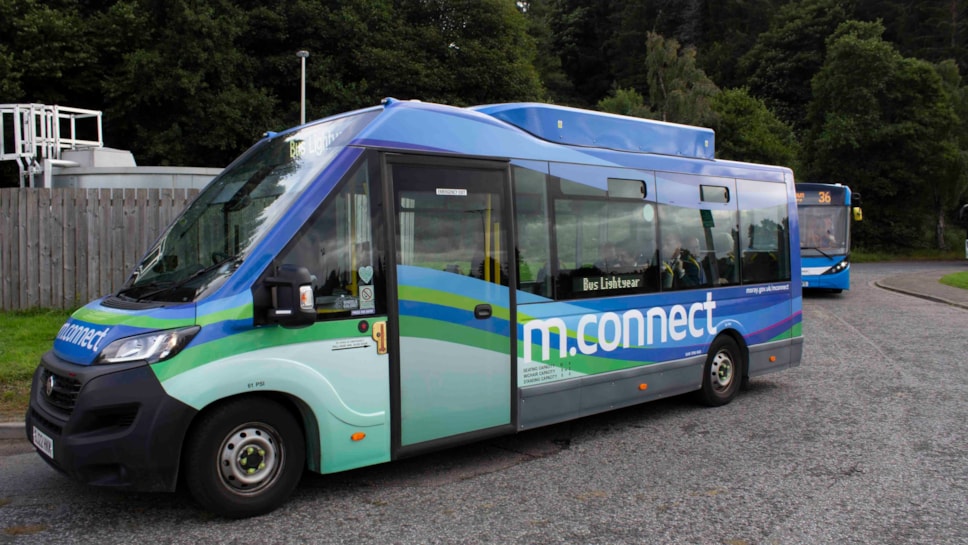
Moray Council’s m.connect bus service drives into next phase
Moray Council’s Bus Revolution project, also known as the popular m.connect bus service, is shifting up a gear as it continues to transform public transport across Moray.
The approved Phase 3 of the programme will focus on strengthening the data, analysis and planning tools needed to support future network growth, while maintaining the existing m.connect services that are already connecting communities across the region.
The decision follows the success of the first two phases of the Moray Growth Deal project, which have expanded bus services, introduced digital booking technology and helped drive significant growth in passenger numbers. Passenger journeys have increased from 45,881 in 2022/23 to more than 85,000 in 2025/26, putting the project ahead of its long-term growth targets.
With passenger numbers continuing to rise, the next step is to build a clearer picture of how people use the network and where future improvements are needed most. By improving how data is collected and analysed, better-informed decisions can be made about services, accessibility and future investment, helping ensure public transport continues to meet the needs of communities across Moray.
Councillor Marc Macrae, Chair of the Economic Development and Infrastructure Committee and Moray Growth Deal lead said: “The next phase is all about refinement of the existing offering, rather than a complete overhaul. What we have is working, and we want to focus on data and the development of analytical tools, optimising the service, and performance evaluation, process improvement and the development of the evidence base required to support future network expansions.”
Depute Leader of Moray Council, Cllr Amber Dunbar, added: “m.connect has become a real success story for Moray, providing reliable and accessible transport options for communities across the area. The approval of Phase 3 reflects our commitment to building on that success. By taking an evidence-led approach, we can make informed decisions about future network development and continue delivering a transport system that meets the needs of residents and supports sustainable economic growth.”